
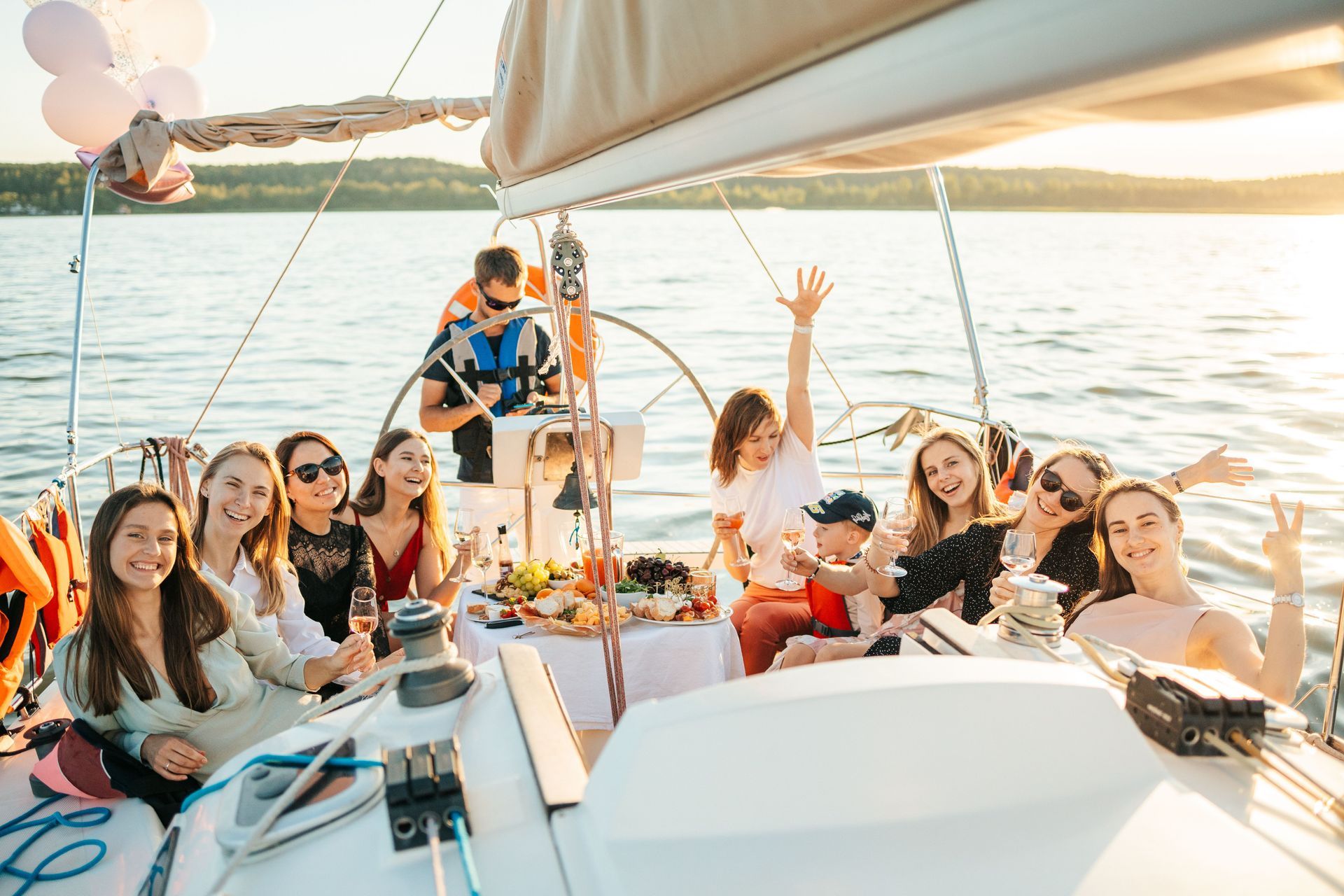
Sandbar Season Guide: Turning a Boat Day into a Whole-Day Destination

Matt McDonald • October 1, 2026

There's a particular kind of boat day that starts strong and fizzles by early afternoon. You get out to the sandbar, everyone wades in for twenty minutes, and then people start drifting back to their seats because there's nowhere to sit, nothing cold left in the cooler, and no real plan for the next four hours. The boat ride was great. The sandbar itself was an afterthought.


The owners who get the most out of sandbar season treat it differently. They don't think of the sandbar as a stop along the way. They think of it as the destination, and they set the day up accordingly.

Pick a Spot That Rewards Staying, Not Just Arriving

Not every sandbar is built for a full day. Some are narrow strips that flood out in an hour as the tide comes in. Others sit exposed to wind and chop with nothing to break either one up. Before you commit to a spot, think about what the tide is doing over the next several hours, not just when you arrive. A sandbar that's perfect at 11 a.m. can be gone by 1.


The best all-day spots tend to have a little variety built in: a shallow shelf for wading and standing around, a slightly deeper pocket nearby for actually swimming, and some kind of natural wind break, whether that's a mangrove line, a point, or just the lee side of a bigger spoil island.

Shade Is the Difference Between Two Hours and Six

Ask anyone who's spent a full day at the sandbar what actually ended it early, and the answer is rarely the water or the company. It's the sun. Without real shade, most groups burn out by early afternoon regardless of how much sunscreen made it into the cooler.


This is where deck space stops being a nice-to-have and becomes the thing that decides how long your day actually lasts. A boat with a wide, open cockpit gives you somewhere to rig a bimini or a shade canopy that people can actually get under, rather than fighting over a six-foot strip of shadow near the helm. The F24 is built with exactly this kind of day in mind. Its layout leaves enough usable deck that a group can spread out, set up shade, and still have room to move around without everyone sitting on top of each other. Take a closer look at the F24 if a full sandbar day is the kind of trip you're planning around.

Food Beats Snacks When You're Staying Put

A bag of chips and a few sandwiches work fine for a two-hour stop. It falls apart around hour four, when everyone's hungry again, and the only thing left is the melted ice at the bottom of the cooler. If the plan is to actually stay at the sandbar rather than just visit it, the food plan needs to match.


That doesn't mean turning your boat into a floating kitchen. It means packing like you're staying for a picnic, not swinging by for a snack: something that travels well without going soft, enough water that nobody is rationing it by 2 p.m., and one indulgent thing that makes the day feel like an occasion instead of just an outing.

Bring Things to Do Besides Swim

Swimming is great for the first hour. After that, a day needs some texture to it, or people start checking their phones and asking when it's time to head back. A deck of cards that won't blow away, a paddleboard or two, an underwater viewer for the kids, a football to toss in the shallows. None of it needs to be elaborate. It just needs to exist, because the groups who bring nothing but themselves are usually the ones packing up earliest.


Games that work in ankle-deep water are worth prioritizing over anything that needs dry sand, since a lot of the best sandbars don't have much dry sand to offer in the first place.

Watch the Tide Like It's Part of the Plan, Not an Afterthought

The single biggest mistake people make on sandbar days is treating the tide as background information instead of an active part of the plan. A sandbar that's dry and welcoming at low tide can be under two feet of water three hours later, and a boat anchored too close can end up stuck or scrambling.


Check the tide table before you leave the dock, not after you're already anchored. Know roughly when the water will start climbing back over your spot, and plan your food, shade, and activity timing around that window rather than around when you happen to get hungry.

Anchor With the Whole Day in Mind, Not Just the Arrival

How you anchor at the start of the day affects how much you're rearranging things three hours later. Give yourself enough swing room for the tide to shift without dragging your boat into somebody else's spot, or into water too shallow to float in by the time you're ready to leave. Dropping a second anchor off the stern can help keep the boat oriented the way you want it as the current changes through the day, instead of swinging broadside and eating into the deck space you were counting on for shade.

Make the Boat Ride Part of the Day, Not Just Transportation

If the sandbar is the destination, don't rush getting there. A slower ride out, with a stop to check a channel or point out a spot you've fished before, sets a different tone than gunning it straight to the anchorage. Some of the best sandbar days include a short detour, a quick look at a nearby cove, or an early stop at a calmer patch of water before the main event. It stretches the day without adding much time, and it means the boat itself is part of the experience instead of just the way you got there.

Check What's Happening on the Calendar Before You Pick a Date

Sandbar days are better with company, and a lot of the best ones aren't spontaneous; they're planned around something. If you're trying to line up a bigger group trip, a raft-up, or want to know what other owners in the area are doing this season, check our events page for what's coming up. A sandbar with three or four boats anchored together and everyone sharing food and shade tends to outlast the solo version every time.


A boat day at the sandbar isn't really about the sandbar. It's about whether you built the day around staying, or just around arriving. Plan for the second one, and the first four hours stop being the whole trip.

Start With Where Your Family Is Headed

The families who end up happiest with their boat five years in are usually the ones who thought past this summer when they bought it. Not because they predicted everything perfectly, but because they built in enough flexibility — in deck space, in layout, in the relationship with the builder — to grow into instead of out of.


If you're at the stage of picturing what your family's next several summers could look like, that's exactly the right time to start the conversation. Bring your actual questions, your actual family, and your actual plans for how you'll use the boat — that's what a semi-custom build is for.

Family enjoying sunset on catamaran deck.
By Matt McDonald • September 17, 2026
Buying a family catamaran is a decade-long decision, not a season-long one. Here's what to weigh before you commit to a boat you'll own for years.
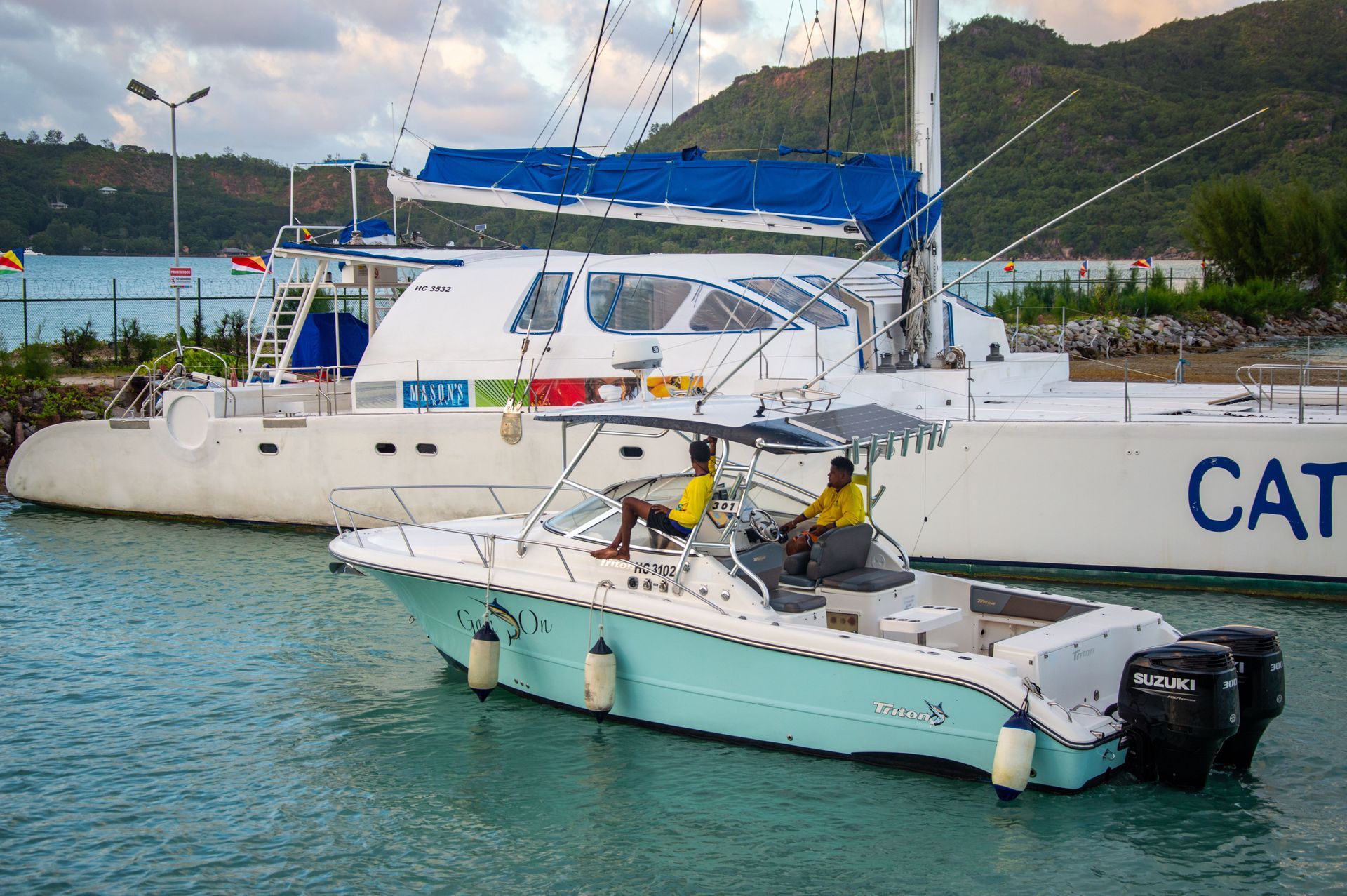
Catamaran and fishing boat docked in marina.
By Matt McDonald • September 3, 2026
What separates a real fishing catamaran from a boat that just floats near the flats? A look at the features serious inshore anglers actually use.
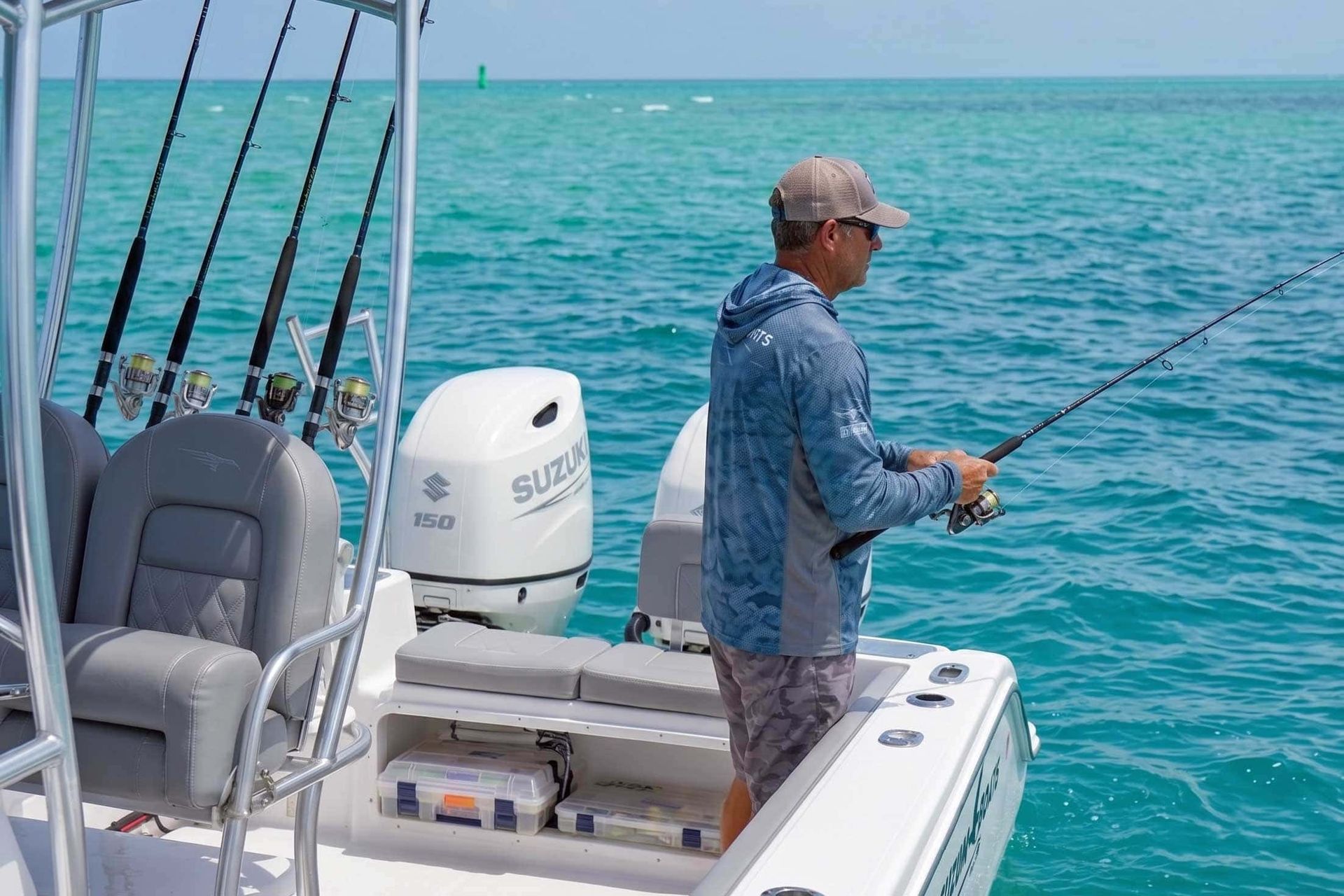
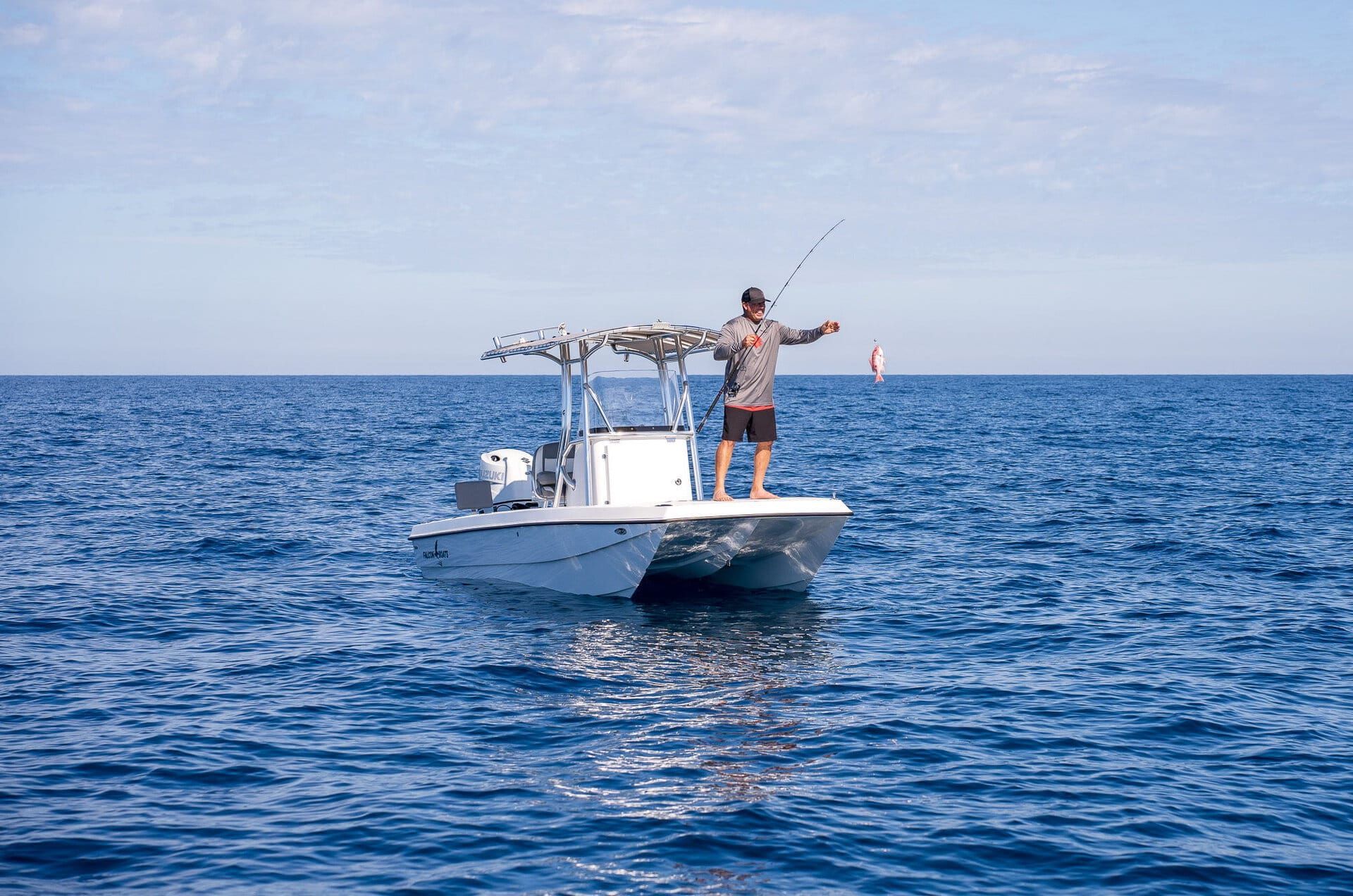
Man fishing from a boat on turquoise ocean water, with a Suzuki outboard motor visible.
By Matt McDonald • August 6, 2026
Heading offshore for serious fishing? See what to look for in a fishing catamaran, from hull stability to rigging, and how the Falcon F24 and F26 measure up.
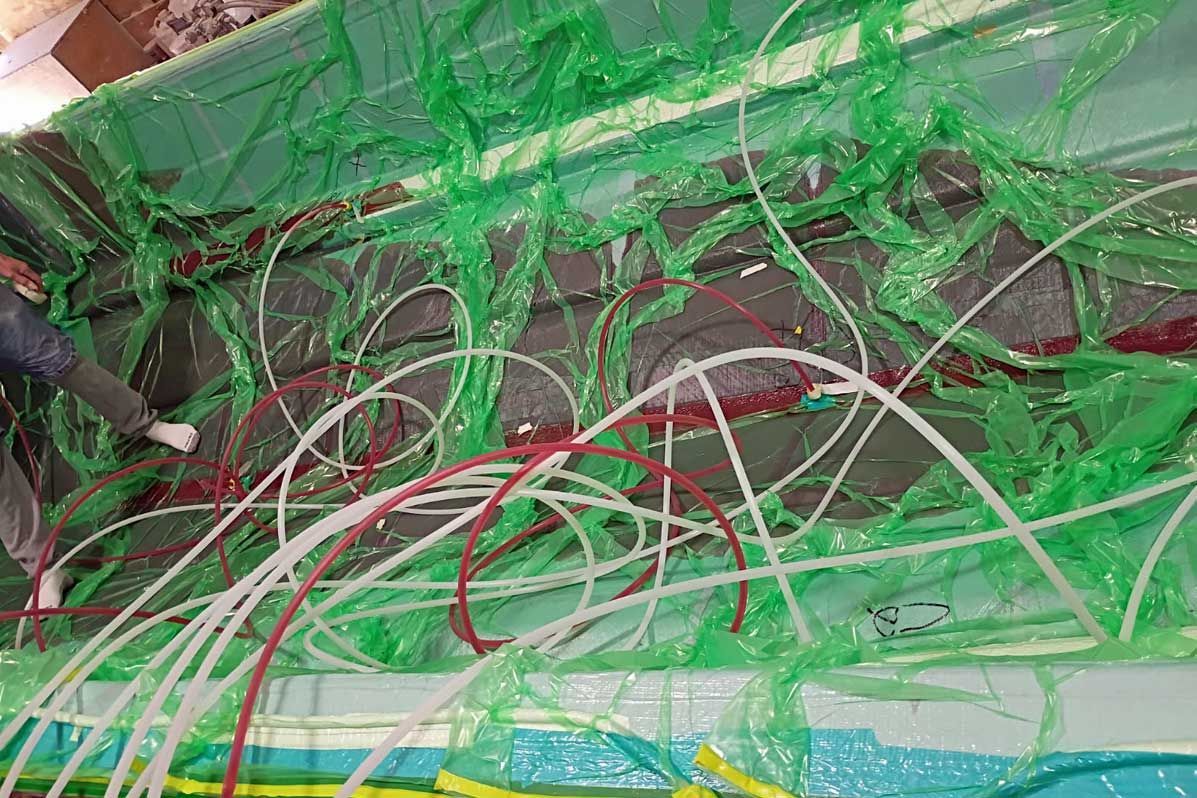
A tangle of green, red, and white wires used in vacuum infused hulls
By Matt McDonald • April 21, 2026
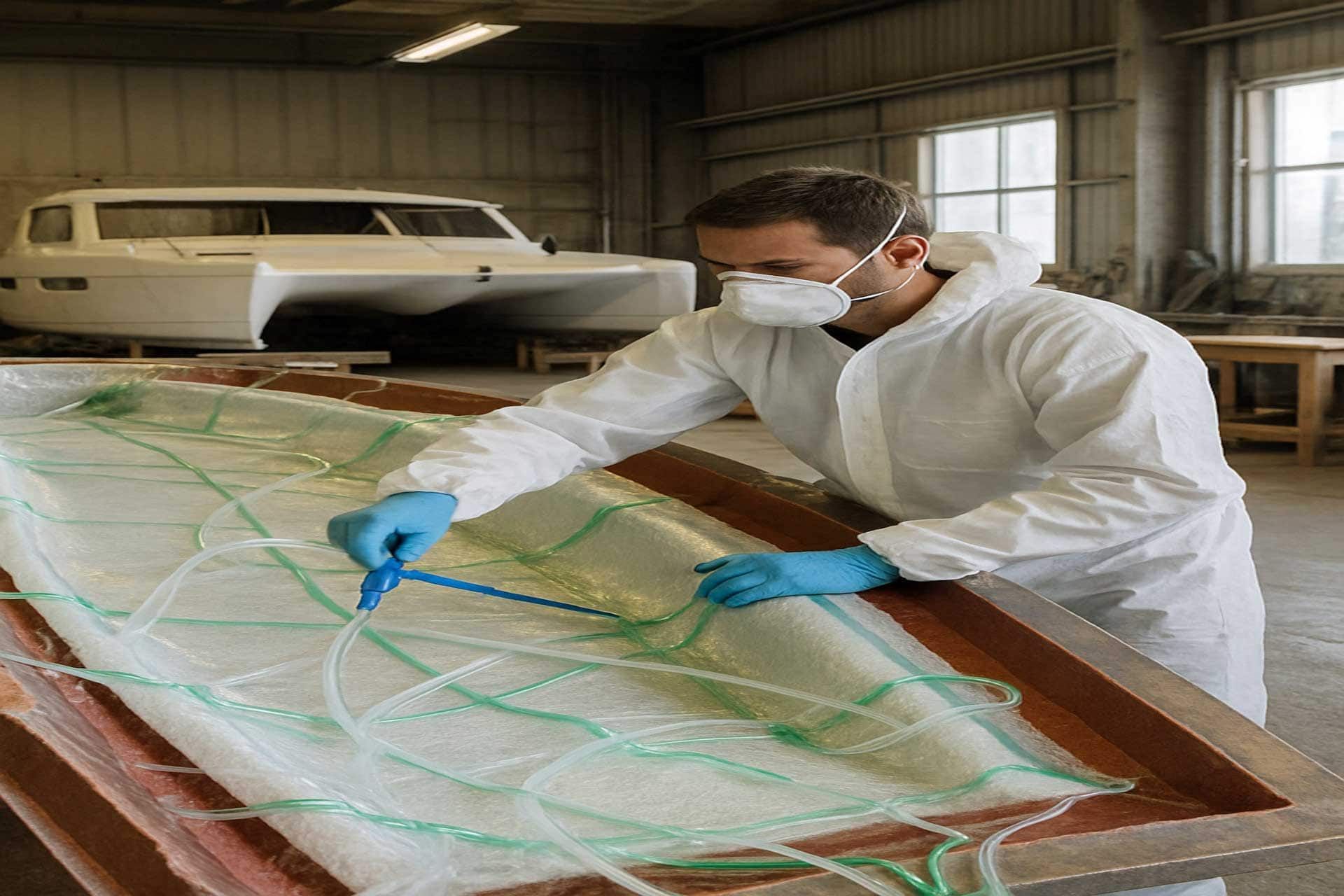
Discover how vacuum infusion technology produces stronger, lighter fiberglass boats with consistent quality, improved fuel efficiency, and superior long-term durability.
White catamaran with black sails sailing on a calm blue ocean under a clear sky.
By Matt McDonald • August 8, 2025
Discover why semi-custom catamarans offer the perfect balance of custom design, faster delivery, and cost efficiency without compromising performance and structural integrity.
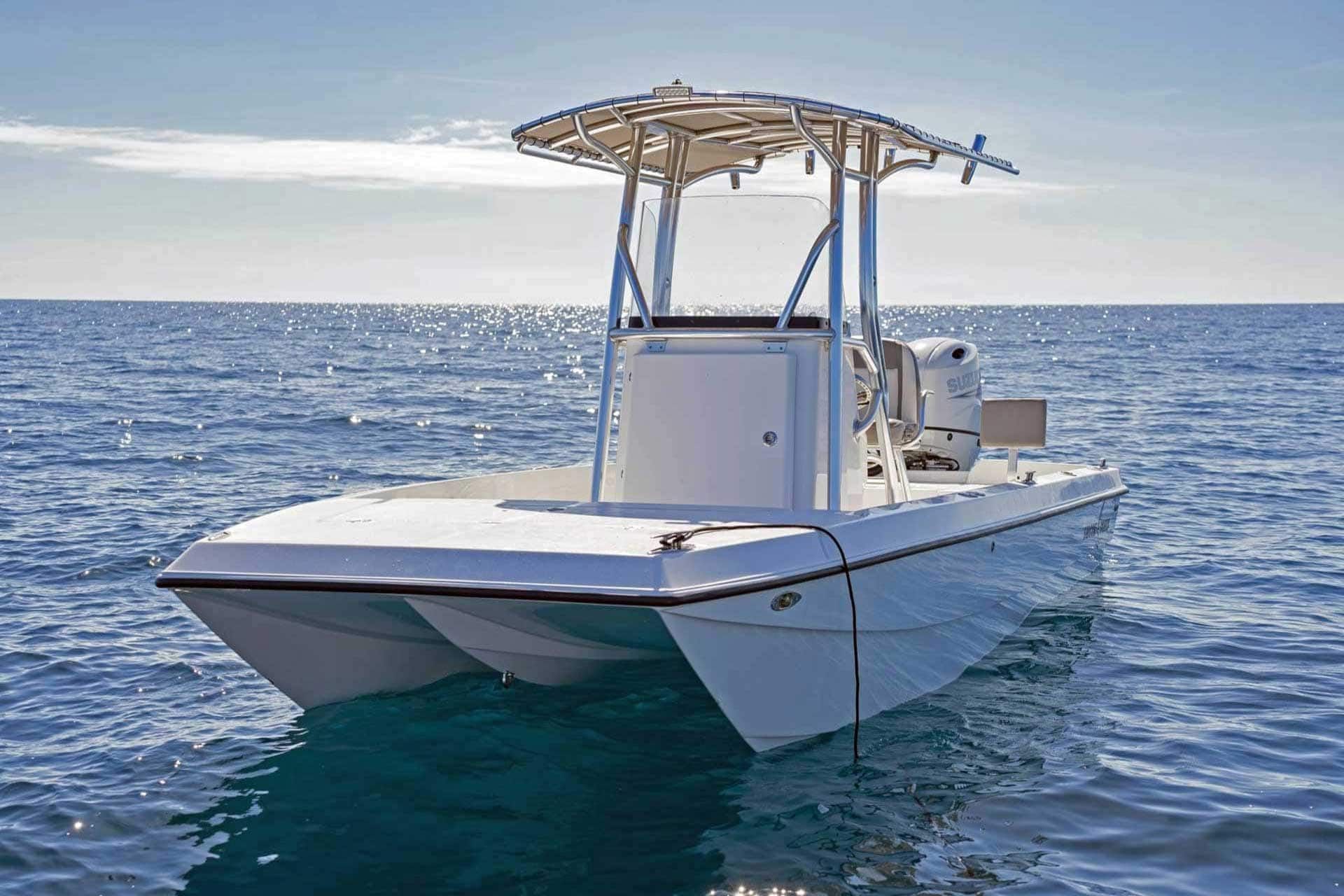
White catamaran boat on calm blue water with a sunny sky.
By Matt McDonald • August 8, 2025
Explore 5 reasons why catamarans outshine monohulls—superior stability, shallow draft, spacious interiors, fuel efficiency, and unmatched safety.
A white catamaran boat with a sunshade on the water, under a sunny sky.
By Matt McDonald • August 8, 2025
Learn how vacuum infusion technology builds stronger, lighter, and more consistent catamaran hulls compared to outdated hand lamination methods.
