
Shallow Draft, Big Advantage: Why Catamarans Open Up Water Monohulls Can't Reach

Matt McDonald • October 15, 2026

Most boat comparisons focus on the numbers that are easy to put on a spec sheet: top speed, beam, fuel capacity. Draft rarely gets top billing, and that's a mistake, because draft is the one number that decides where you're actually allowed to take the boat. Everything else is about how the boat performs once it's on the water. Draft is about which water it can get to in the first place.


A few inches sound small until you're the boat that has to turn around fifty yards short of the flat everyone else is standing on.

What Draft Actually Controls

Draft is simply how much water a hull needs under it to float without touching the bottom. A deep-V monohull, built for cutting through offshore chop, typically needs more of that water than a flat-bottomed or multi-hull design built with skinny water in mind. That difference shows up constantly and in ways that go beyond fishing: anchoring closer to a sandbar instead of wading the last hundred feet, cutting across a shallow bay instead of running the long way around it, getting a beach landing that a deeper boat has to skip entirely.


None of this is exotic. It's the ordinary, everyday version of boating that a shallow-draft hull makes easier almost every single trip..

Why Catamaran Hulls Tend to Run Shallower

A traditional monohull relies on a deep keel or a pronounced V-shape for stability and handling, and that shape is exactly what pushes the draft number up. A catamaran spreads its weight and stability across two hulls set wide apart instead of concentrating it in one deep centerline. The result is a boat that can be just as stable, sometimes more stable, while sitting in noticeably less water.


This isn't true of every catamaran on the market, and it isn't automatic just because a boat has two hulls instead of one. It comes down to how the specific hull is designed. But when a catamaran is purpose-built around shallow-water performance, the draft advantage over a comparable monohull is usually real and usually significant, not a marginal difference you'd need a tide chart to notice.

Where This Matters Most: Flats and Backwater Fishing

Ask any serious inshore angler what ends a trip early, and shallow water access is near the top of the list almost every time. The fish that get selective and hard to reach in deeper channels often move onto skinny flats and into narrow backwater cuts precisely because fewer boats can follow them there. A hull that draws too much water doesn't just make those spots harder to fish. It takes them off the list entirely.


The Bay22 is built around this exact problem. Its shallow draft is the whole point of the design, not a side benefit of building a catamaran in general, and it's what lets owners get into skinny flats, mangrove-lined creeks, and thin backwater cuts that a lot of monohulls plan their whole day around avoiding. Explore the Bay22 if flats access is the priority driving your next boat.

It Matters Just as Much for Sandbar and Leisure Days

Fishing gets most of the attention in this conversation, but the same draft advantage shows up on a completely different kind of trip. Getting close enough to a sandbar to anchor comfortably instead of two hundred feet out. Running a shortcut across a shallow bay instead of the long way around. Pulling up to a shoreline spot that a deeper-draft boat has to admire from a distance.


The F22 carries this same shallow-draft advantage into a boat built more around day trips, sandbar hangs, and general on-the-water flexibility. It's a reminder that shallow draft isn't just a fishing feature. It's an access feature, and access is useful on every kind of trip. See where the F22 fits if you're weighing a boat that needs to do a little bit of everything.

The Trade-Off People Assume Exists (and Usually Doesn't)

There's a common assumption that shallow draft comes at the cost of stability or ride quality, that a boat built to sit in less water must be twitchier or rougher in chop. With a traditional flat-bottom monohull, that trade-off can be real. With a well-designed catamaran, it mostly isn't. The twin-hull layout is what makes the shallow draft possible in the first place, and it's the same feature that gives the boat its stability at rest and its ability to handle chop without pounding. The draft advantage isn't stealing performance from somewhere else on the boat. It's coming from the same design choice that improves several other things at once..

A Few Inches That Change Where You're Willing to Go

Over enough trips, a shallower draft doesn't just add a few good days here and there. It changes the mental map of where you consider going at all. Spots that used to get ruled out automatically, because everyone knows "we can't get in there," start showing up as real options. That shift, more than any single feature on a spec sheet, is what a lot of owners mean when they say a shallow-draft catamaran changed how they use the boat.


If there's water near you that you've been running past for years because you assumed it wasn't reachable, that assumption is worth revisiting. The boat that decides otherwise might just need a few less inches underneath it.

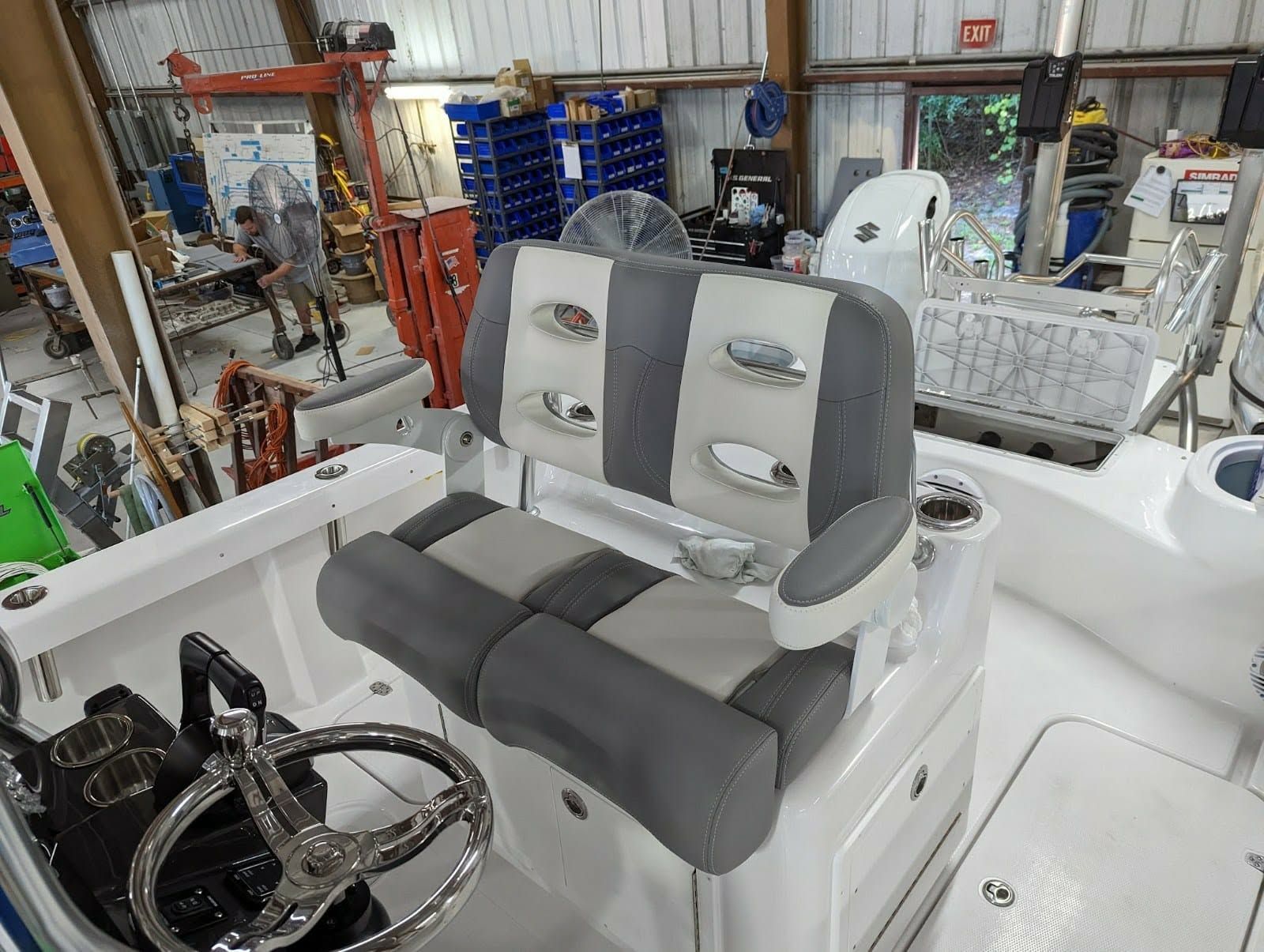
Falcon helm with Llebroc seating in workshop.
By Matt McDonald • November 2, 2026
See how Falcon Boats builds a semi-custom catamaran around how you actually use the water — fishing, family days, or both.
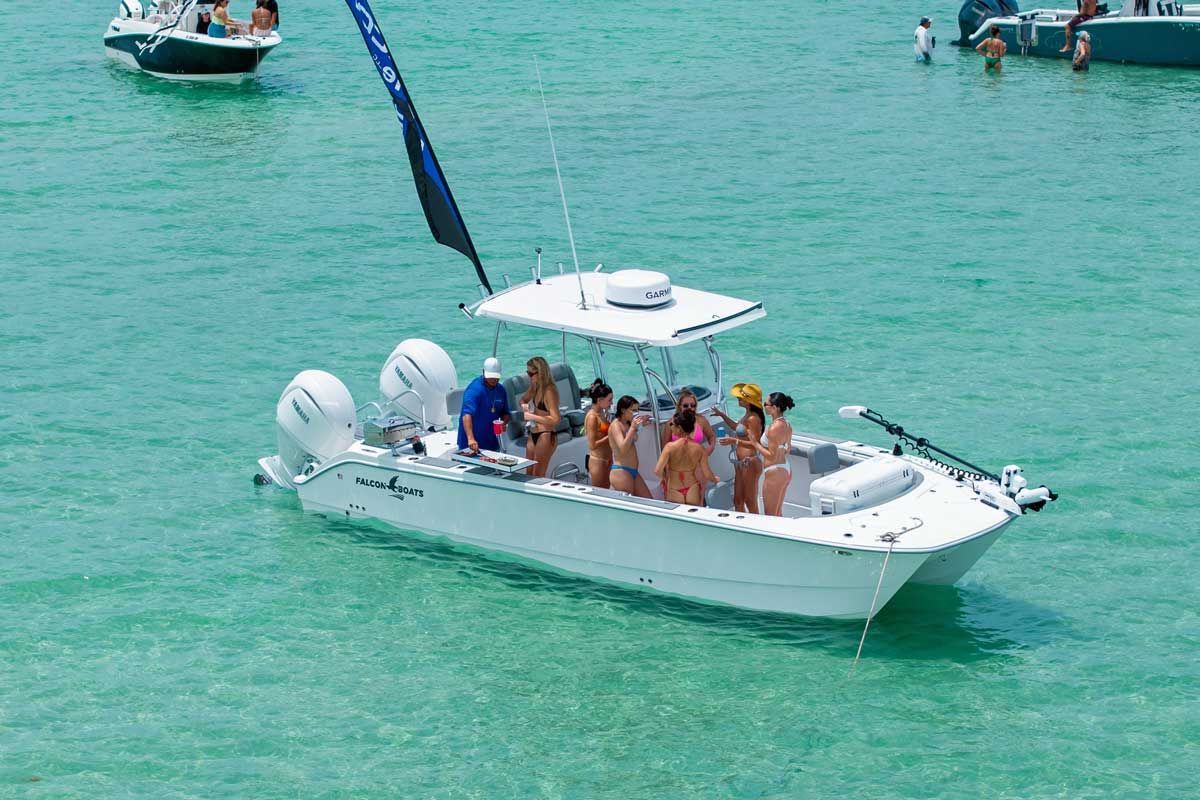
People on a white Falcon catamaran in turquoise water near other boats
By Matt McDonald • October 1, 2026
Anchoring at the sandbar is the easy part. Here's how to turn that stop into the actual centerpiece of your day on the water.
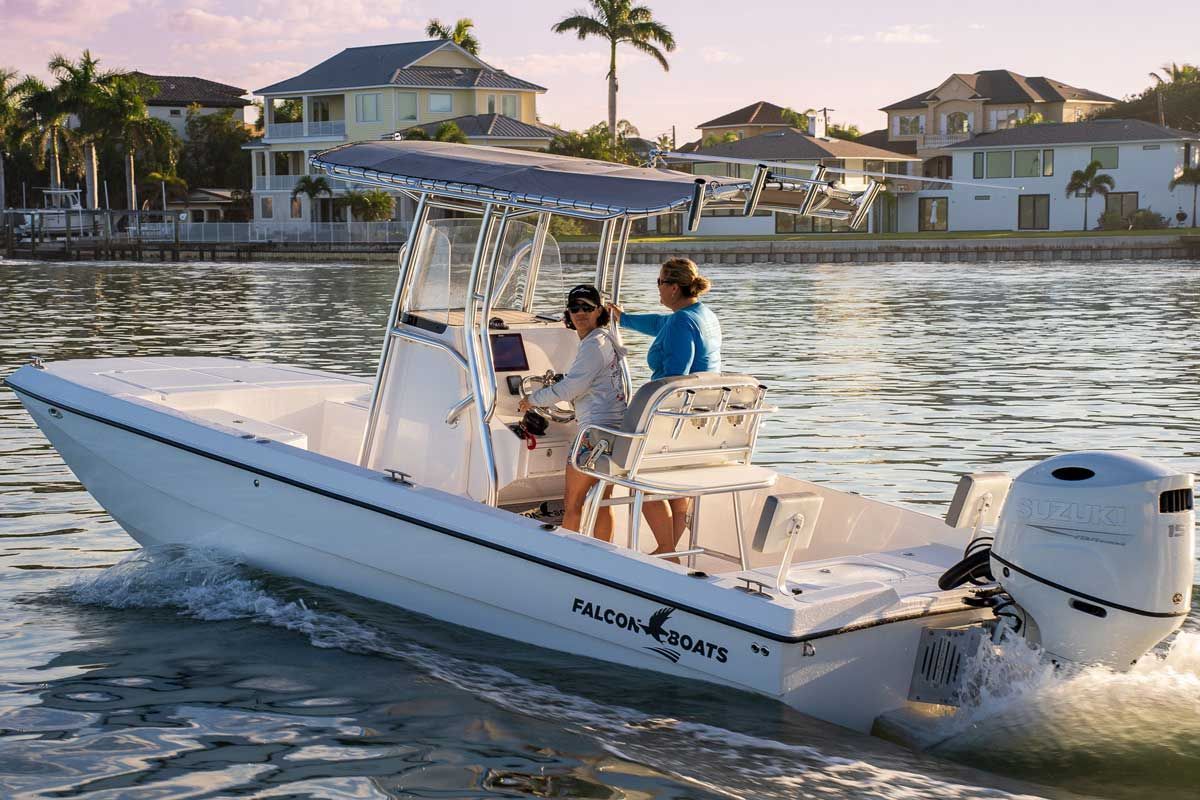
Two people on a white motorboat cruising past waterfront homes at sunset
By Matt McDonald • September 17, 2026
Buying a family catamaran is a decade-long decision, not a season-long one. Here's what to weigh before you commit to a boat you'll own for years.
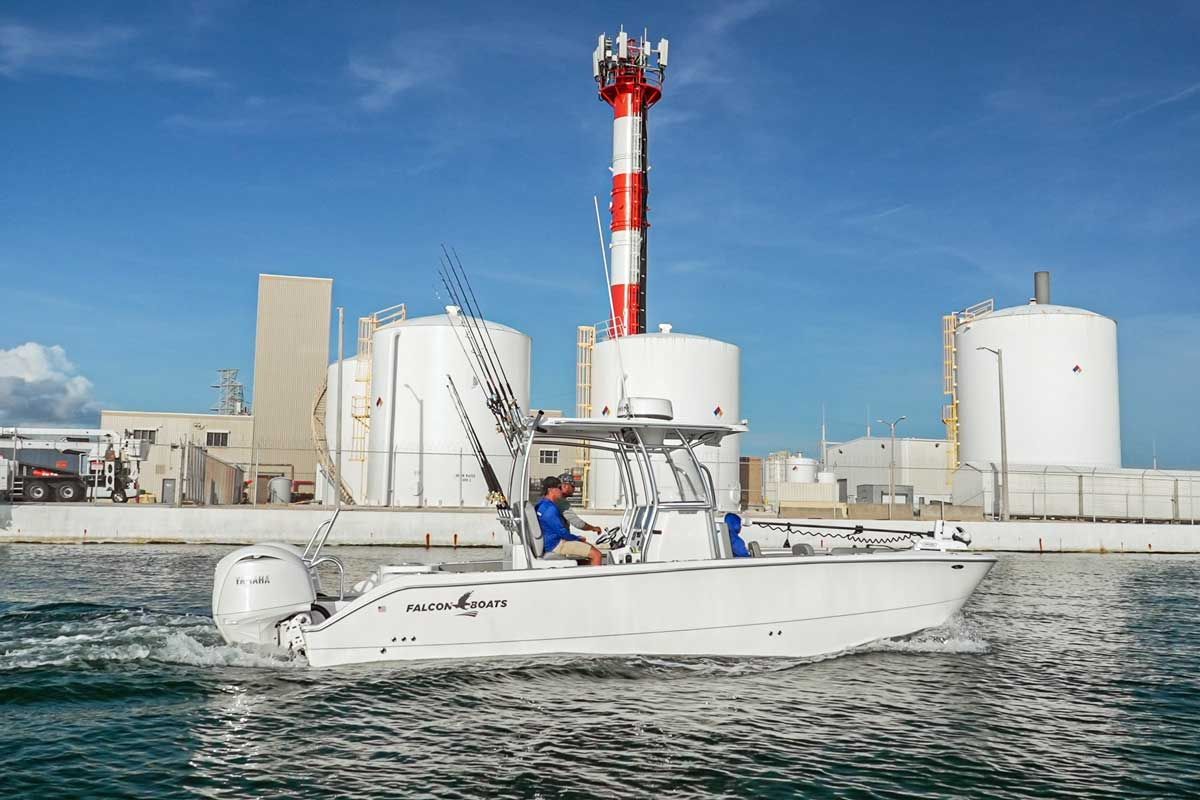
White boat in harbor before industrial tanks and red-striped smokestack under a blue sky
By Matt McDonald • September 3, 2026
What separates a real fishing catamaran from a boat that just floats near the flats? A look at the features serious inshore anglers actually use.
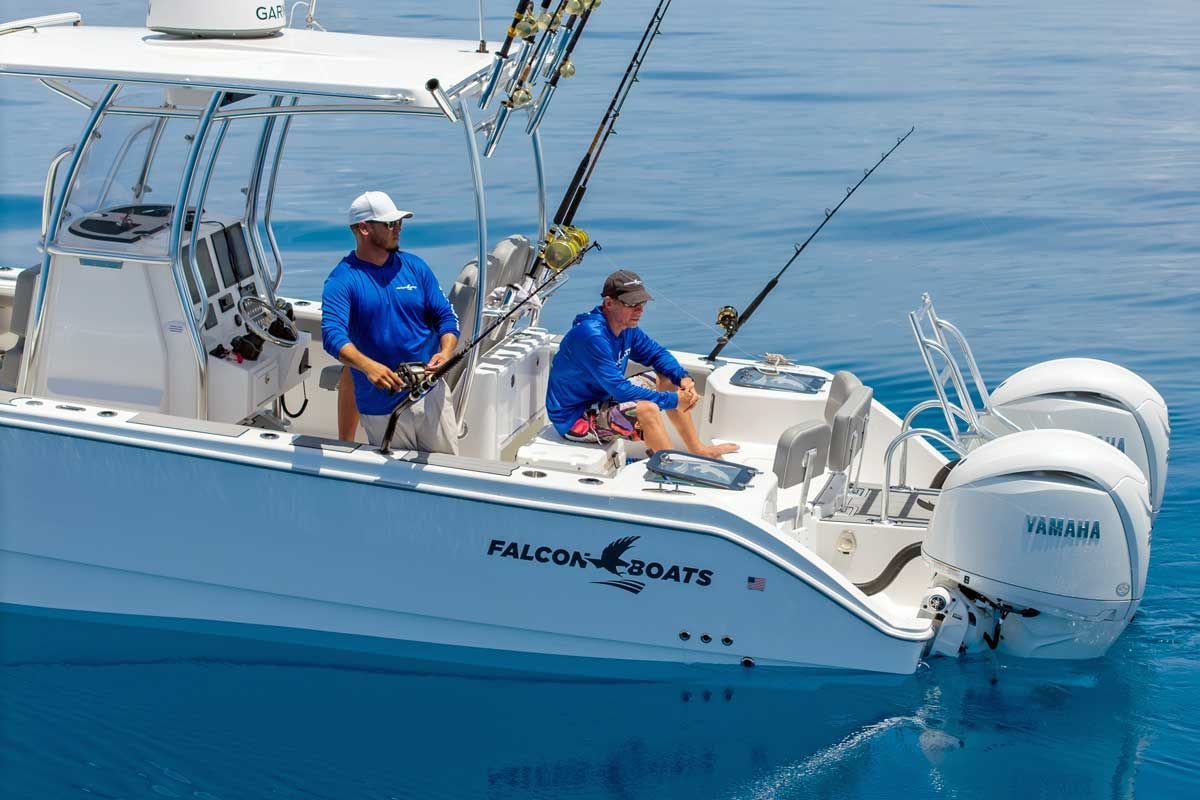
Two people fishing on a white boat in calm blue water
By Matt McDonald • August 6, 2026
Heading offshore for serious fishing? See what to look for in a fishing catamaran, from hull stability to rigging, and how the Falcon F24 and F26 measure up.

A tangle of green, red, and white wires used in vacuum infused hulls
By Matt McDonald • April 21, 2026
Discover how vacuum infusion technology produces stronger, lighter fiberglass boats with consistent quality, improved fuel efficiency, and superior long-term durability.
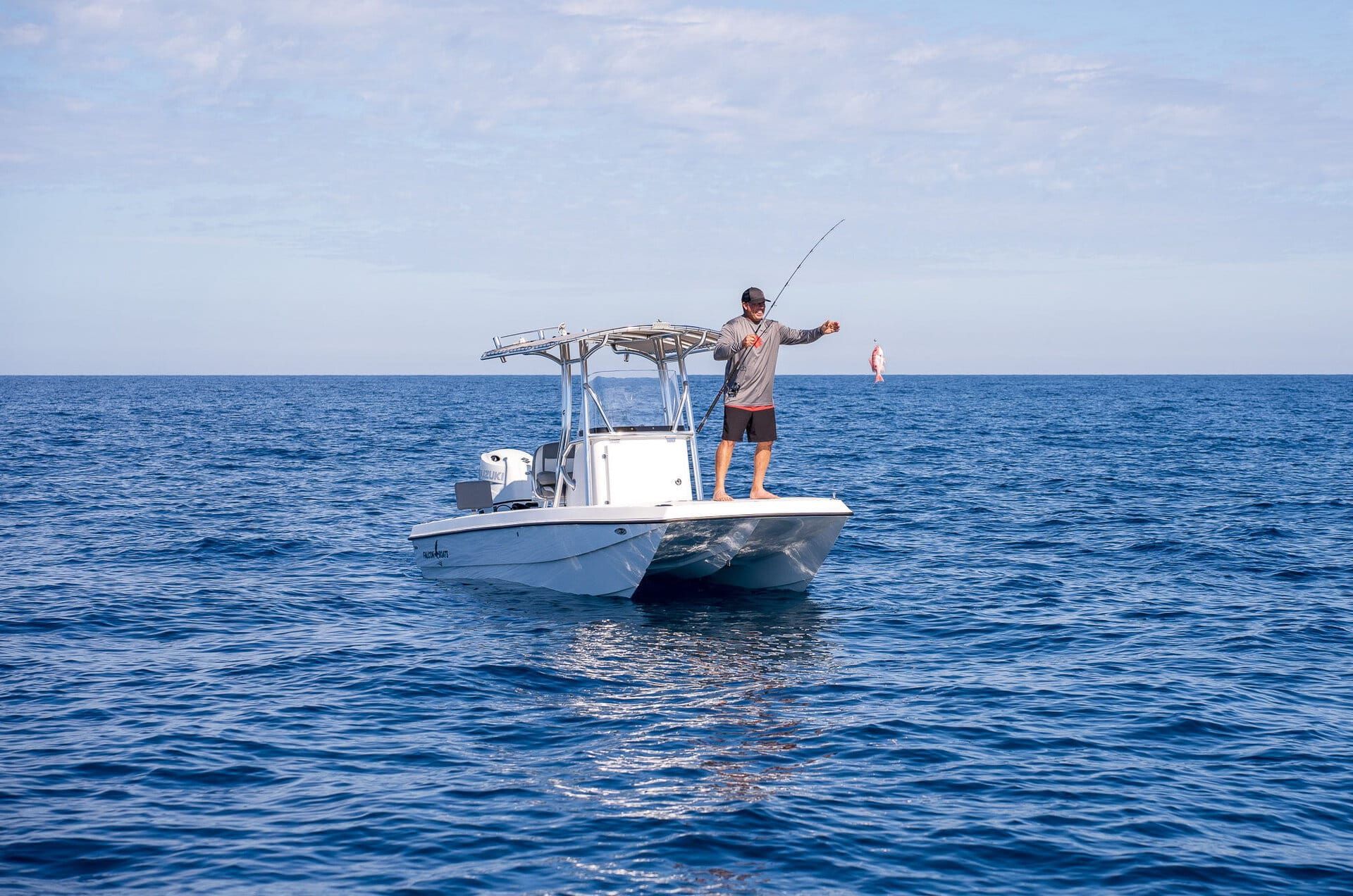
White catamaran with black sails sailing on a calm blue ocean under a clear sky.
By Matt McDonald • August 8, 2025
Discover why semi-custom catamarans offer the perfect balance of custom design, faster delivery, and cost efficiency without compromising performance and structural integrity.
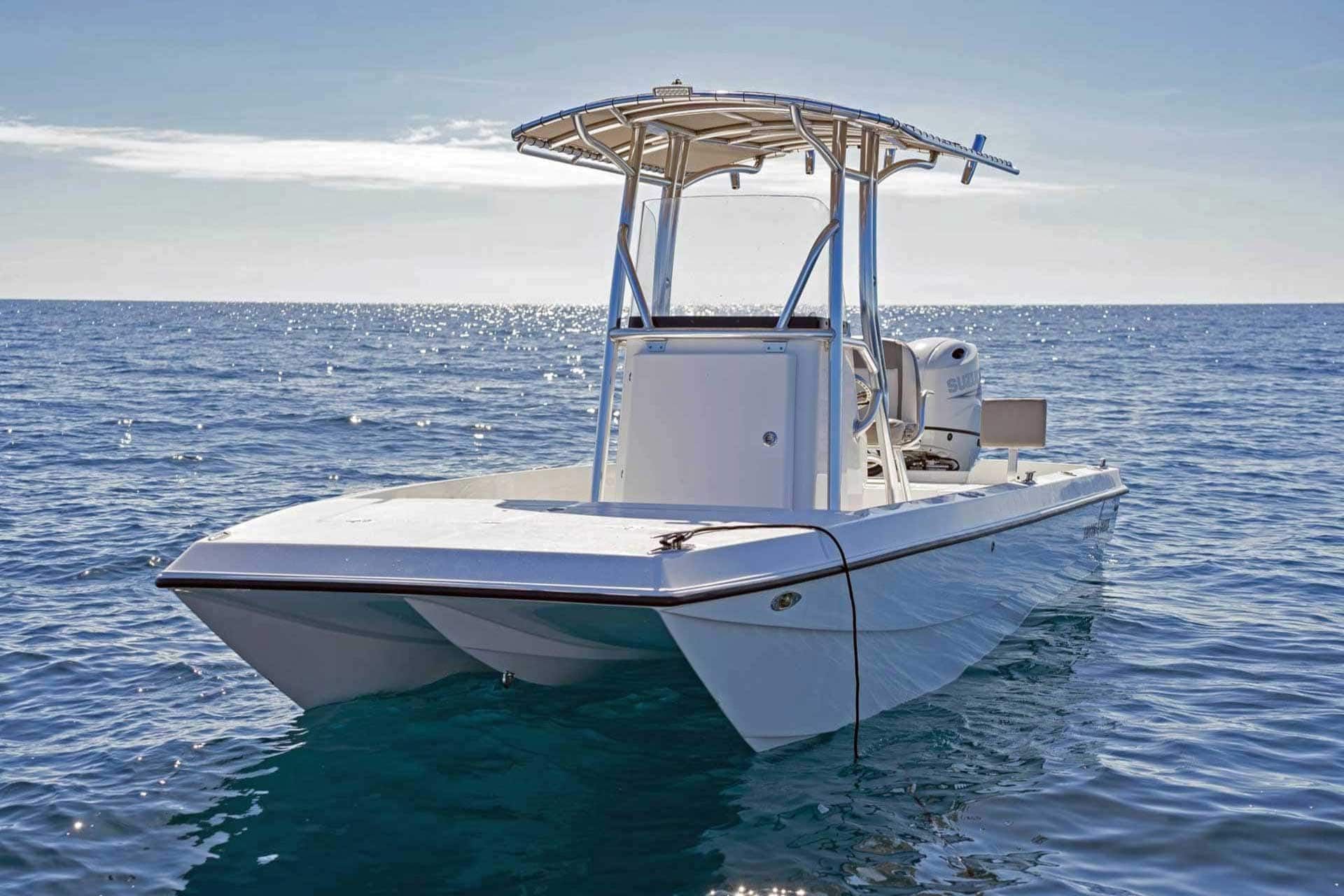
White catamaran boat on calm blue water with a sunny sky.
By Matt McDonald • August 8, 2025
Explore 5 reasons why catamarans outshine monohulls—superior stability, shallow draft, spacious interiors, fuel efficiency, and unmatched safety.
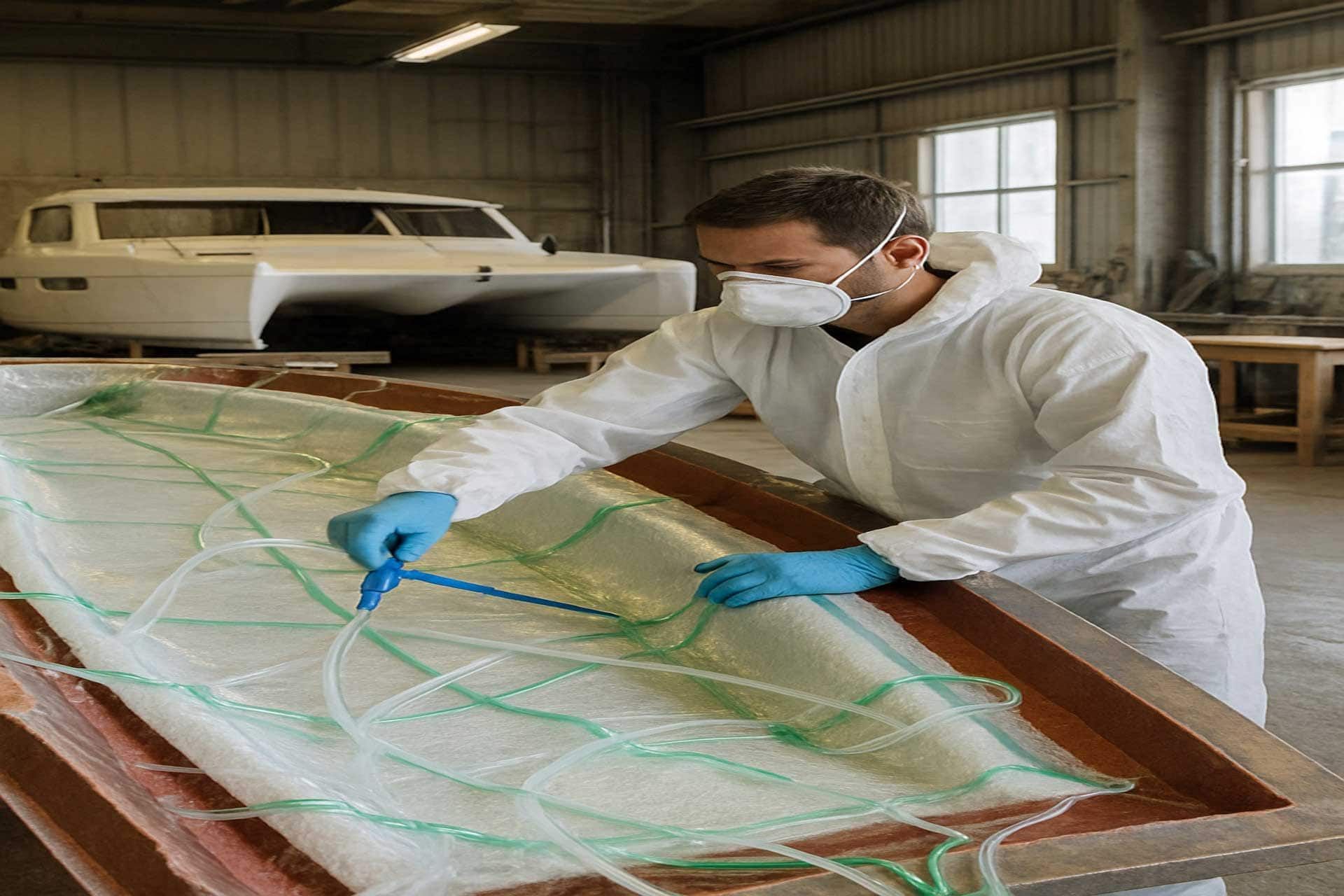
A white catamaran boat with a sunshade on the water, under a sunny sky.
By Matt McDonald • August 8, 2025
Learn how vacuum infusion technology builds stronger, lighter, and more consistent catamaran hulls compared to outdated hand lamination methods.
